
Menopause and Perimenopause Overview
Menopause is a natural part of every woman’s journey. It’s defined as the time when your periods have stopped for 12 months in a row, usually happening somewhere between 45 and 55. But it’s not just about periods ending—it’s a time of big changes that can affect both your body and your feelings.
Perimenopause is the lead-up to menopause and can start in your mid-40s. It sometimes lasts several years as your body gradually slows down its production of key hormones, oestrogen and progesterone. These hormonal ups and downs bring a variety of symptoms, and no two women will have exactly the same experience.
Some common signs you might notice are
- Irregular or skipped periods
- Hot flushes and night sweats
- Mood changes like feeling irritable, anxious, or low
- Trouble focusing or with memory (“brain fog”)
- Vaginal dryness or discomfort during sex
- Lower interest in sex
- Problems sleeping
- Achy joints
- Changes in skin, hair, or weight
- Fertility gradually declining
Why Do These Changes Happen?
As you move through menopause, your ovaries begin producing less oestrogen and progesterone. These hormones do much more than just manage your monthly cycle—they help keep your bones strong, your heart healthy, your skin and hair vibrant, and even support your mood and energy. Progesterone is particularly important for keeping the lining of your womb healthy.
Why Is Progesterone Important?
If you have a womb and are considering hormone replacement therapy (HRT), you’ll need both oestrogen and progesterone. Oestrogen on its own could cause the lining of your womb to build up, which isn’t healthy. Progesterone prevents excessive proliferation of the endometrial lining thereby reducing the risk of endometrial hyperplasia and protecting uterine health.
Why Consider Treatment?
Not every woman needs or wants treatment, and that’s perfectly okay. But for many, these symptoms can really get in the way—affecting sleep, relationships, work, and how you generally feel about life. Low oestrogen over time can also increase your risks for things like fragile bones, heart disease, and changes in bladder or vaginal tissues.
Treatment (especially HRT) isn’t just about relieving symptoms. It’s also about taking care of your longer-term health and keeping your future bright.
What Is Hormone Replacement Therapy (HRT)?
HRT gently replaces the oestrogen (and progesterone, if you have a womb) your body is losing. Many women find it gives huge relief from hot flushes, night sweats, mood changes, and brain fog. It can help you sleep better, feel more energetic, protect your bones and heart, and bring back the comfort you may have been missing in daily life.
HRT Pros and Cons
What are the benefits?
- Hot flushes, sweats, and mood swings tend to ease up
- Sleep often improves
- Bones get stronger; risk of fractures drops
- Vaginal dryness and bladder issues may get better
- Some find their skin or hair improves
- Life can just feel better and more manageable
What are the downsides?
- There’s a small increased risk of breast cancer, depending on how long and what type of HRT you use
- Slightly higher risk of blood clots or stroke if using older type regimes with oral oestrogen
- You might notice breast tenderness, some irregular bleeding, or bloating when starting
For many women, the benefits and improvements in quality of life make HRT well worth considering. We will help you weigh up the risks and choose what’s best for you.
What are the Different Forms of HRT?
- Oestrogen-only HRT: Used by people who do not have a womb (e.g., after a hysterectomy). Oestrogen comes as tablets, patches, gels, sprays, creams, or vaginal rings.
- Combined HRT: Most people use combined oestrogen and progesterone when the womb is still present. This protects the womb lining and comes in tablets, patches, gels, or via an intrauterine device (coil).
- Testosterone: Sometimes used to help manage specific menopause symptoms, such as low libido, and typically recommended by a doctor with a specialist interest in menopause care.
HRT can be taken as:
- Tablets
- Skin patches or gels or a spray
- Vaginal rings, creams, or pessaries for vaginal symptoms
- Intrauterine device (IUS/coil) for progesterone
Why is Transdermal Oestrogen Usually Preferred?
Transdermal means medicines delivered via the skin, such as patches, gels, or sprays. This method is preferred because:
- It avoids the liver and goes directly into the bloodstream, which reduces the risk of blood clots and stroke compared to tablet forms.
- It usually causes fewer side effects and provides more stable hormone levels.
- It is recommended for people at higher risk of clots, those with migraines, or any history of blood clotting problems.
What is Body Identical or Non-Synthetic Progesterone?
- Body identical hormones are made to have the same structure as the hormones found naturally in the human body.
- These hormones are often derived from plants, such as yams or soy, and are tested for safety and effectiveness.
- Micronised progesterone is the body-identical type most commonly used. It is usually taken as a capsule (for example, the brand Utrogestan) and may be used orally or vaginally.
- Body identical HRT is different from older, synthetic hormone versions and is considered safer with fewer side effects like mood swings or sleep disturbance.

HRT: How is it given?
There are two main approaches if you need both estrogen and progesterone.
- Sequential (Cyclical) HRT You take oestrogen daily, but add progesterone for part of the month—usually 10 to 14 days. This typically causes a monthly “period-like” bleed, and is recommended if you’re still having some periods or it’s less than a year since your last one.
- Continuous Combined HRT You take both estrogen and progesterone every day, with no monthly bleed. This option is usually for women who haven’t had a period for 12 months or more.
Remember, menopause is a unique journey. How you feel and what treatment you choose is deeply personal—there’s no “one-size-fits-all.” You’re not alone, and support is available every step of the way.
HRT and Breast Cancer Risk: Understanding the Facts
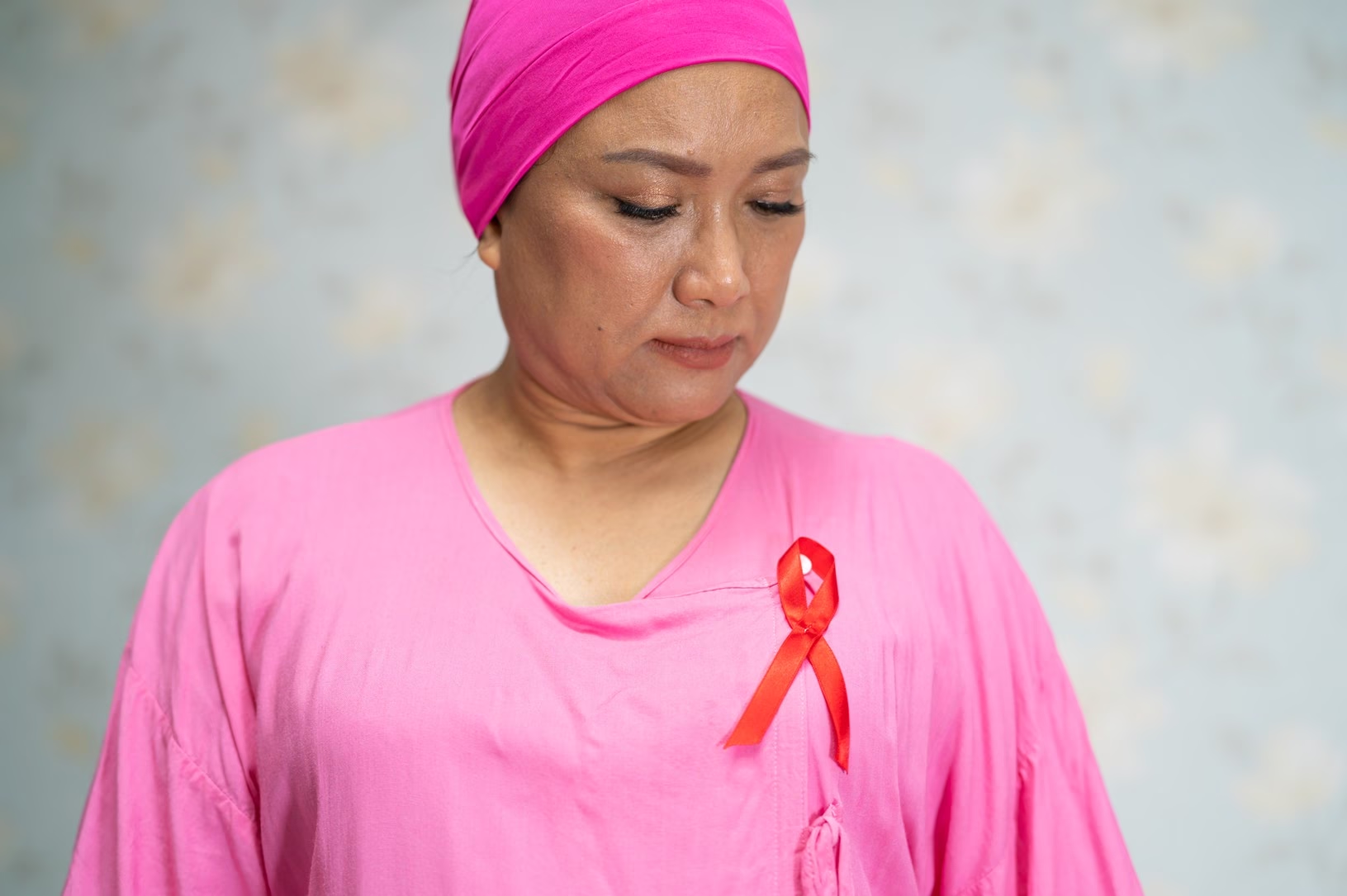
Hormone Replacement Therapy (HRT), particularly combined oestrogen and progestogen therapy, is associated with a slight increase in breast cancer risk. However, this risk needs to be understood in the context of natural risks and other lifestyle factors.
What the Numbers Show
- Among 1,000 women aged 50–59 over five years:
- About 23 women who do not use HRT will be diagnosed with breast cancer.
- Use of combined HRT adds around 4 additional cases (total 27 per 1,000 women).
- The British Menopause Society states that there is little or no increased risk of breast cancer with oestrogen only HRT.

Putting Risk in Perspective
- Drinking 2+ units of alcohol daily adds approximately 5 additional cases per 1,000 women.
- Being overweight (BMI ≥30) adds 24 additional cases per 1,000 women.
- Smoking adds about 3 additional cases per 1,000 women.
- Regular moderate exercise is associated with 7 fewer cases per 1,000 women.
These comparisons demonstrate that the breast cancer risk linked to combined HRT is small relative to multiple lifestyle-related risks.
Additional Important Points
- The increased breast cancer risk from combined HRT diminishes back to baseline within a few years after stopping treatment.
- Vaginal oestrogen treatments do not increase breast cancer risk.
- Individualized HRT choices—considering type, dose, and duration—should be discussed with your Doctor.
Resources for Further Information
For a clear visual summary, you can view or download the British Menopause Society’s infographic on HRT and breast cancer risk here:
BMS HRT and Breast Cancer Risk Infographic (PDF)
Understanding the Risks of Breast Cancer (PDF)
This evidence supports the conclusion that, for most women, HRT-related increase in breast cancer risk is very small compared to other common lifestyle factors and should not be a barrier for those who need symptom relief and improved quality of life. Always discuss your personal risks and medical history with a specialist when considering HRT.